Between Light and Gray
The dance evening GRAY presents a compelling encounter between sweet lightness and heavy, unsettling reality.
Itzik Galili’s duet, born from Cuban charm, brings humor, passion, and liberation to the stage.
Opposite it stands Tamir Ginz’s work: gray, intense, and full of human pain.
Together, the two pieces create an emotional journey that stirs the heart and leaves a lasting impression.
I attended the premiere of GRAY at Suzanne Dellal Center.
The evening opens with the familiar sounds of Cherry Pink and Apple Blossom White, Peretz Prado’s hit that dominated the U.S. charts for ten consecutive weeks in 1951. From the very first note, it is easy to understand why Itzik Galili was enchanted by this music during his visit to Cuba.
The duet he creates to this music is a celebration of humor, seduction, and playfulness. She is a feline with sinfully full hips, he is a devoted nerd caught in a dance of passion, liberation, and sweet absurdity.
“It’s cherry pink and apple blossom white, The music plays and I forget the time.”
These lines seem to float above the stage, adding a layer of sweetness that highlights the lightness and the fleeting sense of escape that the dance offers.
It is a moment of levity that fills the theater with smiles.
Then comes the evening’s central work, GRAY, by Tamir Ginz, and it shakes the air.
Here, there are no clear colors, no black or white; everything is wrapped in the heavy fog of a complex reality. Ginz presents a striking piece born from recent years – years of rifts, struggles over land and identity, and public discourse that inflames passions and leaves wounded souls in its wake.
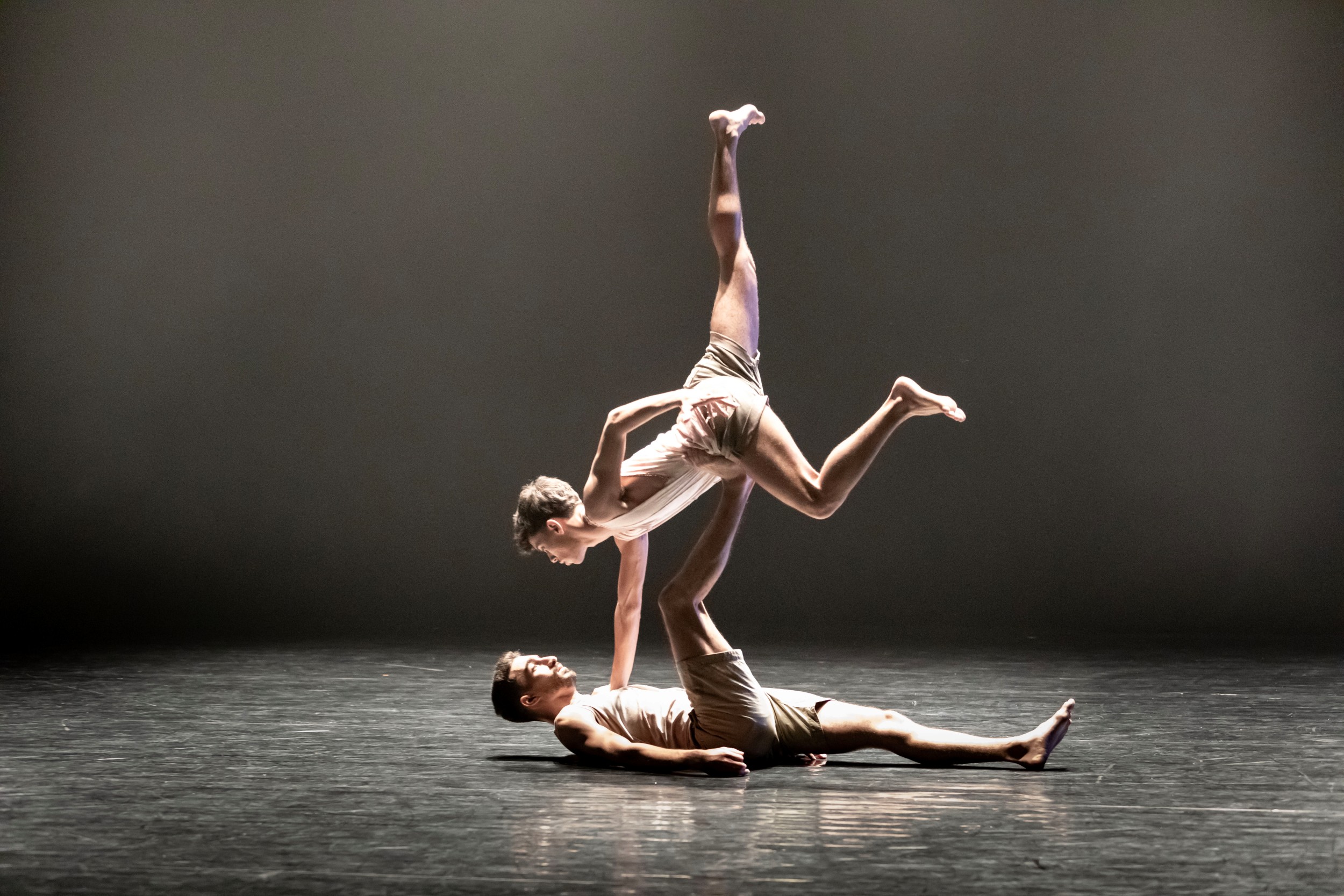
Within this gray, there is a strong sense of uncertainty, a yearning for something intangible. Ephemeral, mysterious moments appear like quiet prayers. Sharp lighting highlights a trembling hand seeking contact, embraces that collapse into falls, and distance opening between bodies trying again and again to return to one another. The dancers move in a world of instability, as if the ground itself trembles beneath them. Amid it all, they search for a glimmer of hope, something to hold onto, even if it is small and fragile.
The combination of these two works that comprise GRAY creates an evening that feels like a deep breath – an inhalation of sweetness and an exhalation of pain. Galili reminds us of the joy of play, the ability to laugh at ourselves, while Ginz holds up a sharp mirror to reality, forcing us to face it unflinchingly. The transition between them creates a complete, human experience.
GRAY is a dance evening that manages to touch both extremes of emotion – from the sweet and liberated to the intense and painful. It reminds us that life itself always exists between these poles: between laughter and tears, between light and gray. Together, the two works create an experience that lingers long after the lights go out.